To acknowledge World Psoriasis Day, we thought we would share some recent research published by Broadstreet’s Shelagh Szabo, along with Evi Germeni and Neil Hawkins from the University of Glasgow. They have been looking at how patient preferences are incorporated in health technology assessment processes, and more broadly about the opportunities for qualitative evidence to inform these decisions. Their recently published qualitative study explores patient preferences and their drivers among people with psoriasis. The study, which was published in Patient Preference and Adherence in April explored why treatment preferences vary among people with moderate-to-severe psoriasis and which factors shape their choices.
In the study, researchers interviewed 38 Canadian adults with moderate-to-severe psoriasis between October 2023 and December 2024. Participants discussed their experiences with psoriasis and the factors that mattered most when choosing treatments. Two main priorities were identified: controlling psoriasis symptoms and minimizing the negative impact of treatment. All participants valued effective treatments, but their preferences for other treatment characteristics varied. Some prioritized symptom control for effective relief, to minimize disruption to daily life, reduce embarrassment or stigma, or to help manage other health conditions. Others placed greater importance minimizing the negative aspects of treatment through choosing an convenient or easy to use treatment, avoiding ‘unnecessary’ medical treatment, or minimizing side effects.
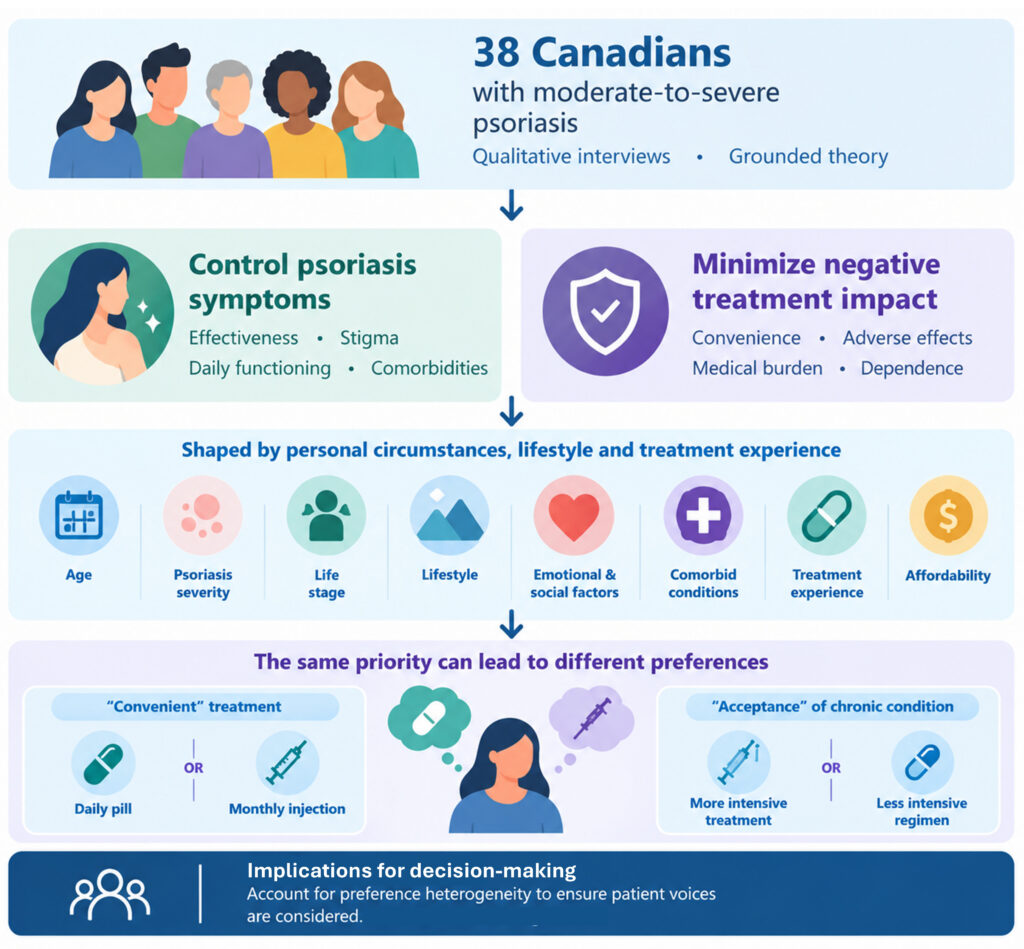
Importantly, people could share the same underlying priorities but prefer different treatments. For example, some considered a daily pill convenient, while others preferred a monthly injection, depending on what best suited their lifestyle. Similarly, accepting psoriasis as a chronic condition could mean pursuing more intensive treatment to minimize its impact or choosing a less intensive approach to reduce treatment burden. Preferences also differed due to factors such as age, disease severity, life stage, and previous treatment experience. These findings show that there is no single treatment approach that best meets everyone’s needs. Understanding differences in patient preferences is important for shared decision-making; and could also inform healthcare decision-makers when evaluating treatments for psoriasis to make decisions about their availability.